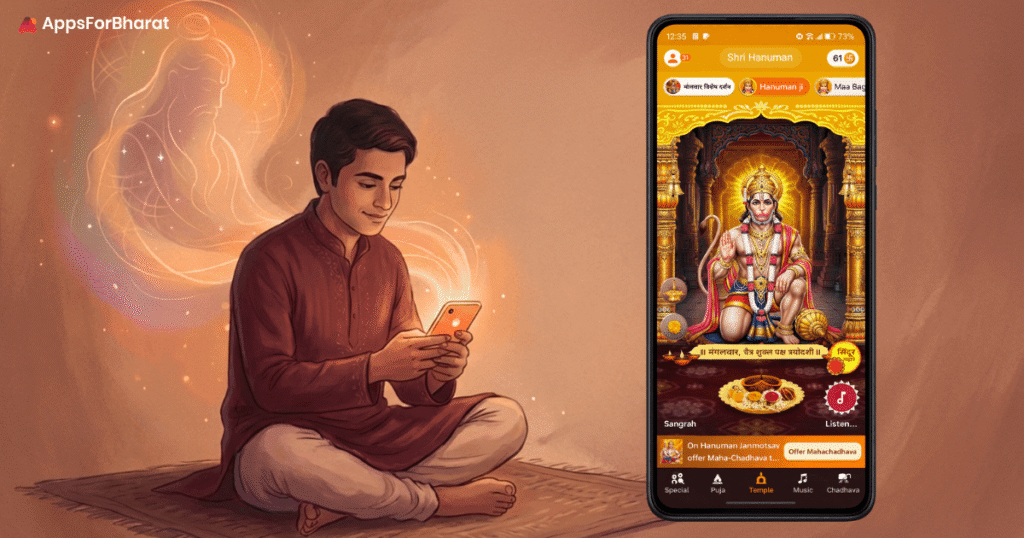
India has always been a country where devotion is deeply woven into everyday life. For many people, the day starts with a small prayer, a temple visit, or simply remembering a deity before beginning work. Faith here is not just about festivals or rituals – it’s a daily rhythm.
At the same time, India is also going through one of the fastest digital transformations in the world. UPI payments, food delivery, online education, AI tools – everything is moving online. But one thing I never really thought about before my internship was this:
What happens when devotion and technology meet?
Over the past few months while interning at AppsForBharat, I got a closer look at how technology can actually enhance spiritual experiences rather than replace them. And honestly, some of the features surprised me in how thoughtfully they blend tradition with modern tech.
The Puja & Chadhava Experience
One of my favourite features is the Puja and Chadhava offering. Traditionally, if someone wanted to perform a puja at a temple in another city, they either had to travel or ask someone else to do it on their behalf. That’s not always practical.
Apps like Sri Mandir make this possible digitally. You can book a puja at a temple through the app, and the priest performs the ritual at the temple on your behalf. What makes it feel authentic is that the priest actually chants your name and gotra during the ritual, and you receive a video of the offering as proof. The first time I saw this feature, it genuinely felt like a clever way to solve a real problem. It keeps the ritual intact while removing the geographical barrier. For someone living far from their hometown temple, that can mean a lot.
Daily Quiz: Learning Dharma, One Question at a Time
Another feature I found interesting is the Daily Quiz. It sounds simple, but it’s surprisingly engaging. Every day, users get questions related to Hindu scriptures, stories, and traditions. The fun part is that it doesn’t feel like studying religion. It feels more like a small daily challenge that slowly increases your knowledge about dharma. Over time, you start learning small things, about deities, rituals, festivals, or mythology – that you probably wouldn’t have looked up on your own. It’s a small feature, but it quietly makes spirituality more interactive.
AI Guruji: Spiritual Guidance Meets AI
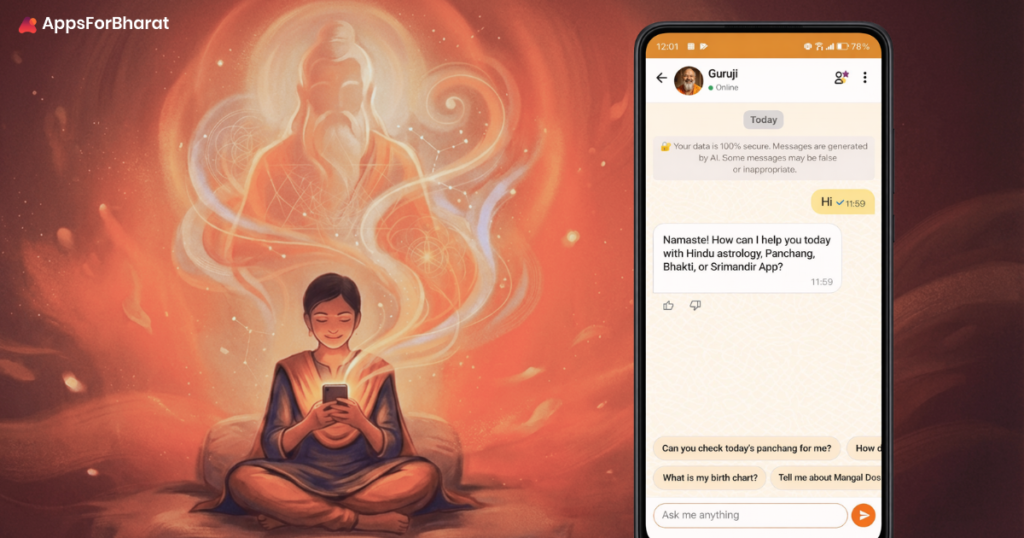
Then there’s something that felt very “2026”: AI Guruji. It’s essentially an AI-powered chatbot that provides spiritual guidance. Users can ask questions related to astrology, life situations, or spiritual practices. What makes it interesting is that it doesn’t just give generic answers. The responses are based on astrological factors like planets and stars, making the guidance feel more personalized. Seeing AI used in a space like spirituality was honestly unexpected at first. But it actually makes sense. A lot of people already seek astrological guidance – this just makes it more accessible and digital.
Punya Mudraya: When Devotion Gets a Streak
One of the most fun features is Punya Mudraya (PM). Users earn these coins by maintaining daily devotional streaks on the app – things like completing prayers, quizzes, or other spiritual activities. These coins can later be redeemed for certain offerings or services. It sounds like a small gamification feature, but it works surprisingly well. At home, my mom actually checks her streak and compares it with mine. If I miss a day, she immediately points it out. So yes, devotion now comes with a family leaderboard at home.
Why This Matters for the Next Generation
What I found most interesting through this experience is that technology doesn’t have to make traditions disappear. Sometimes it can preserve them in new ways. For Gen Z and younger audiences, spirituality often feels distant because it is usually taught through lectures or long rituals that feel hard to relate to. But when you bring elements like interactive learning, AI guidance, streaks, and digital access to temples, the entire experience becomes more approachable.
Instead of replacing tradition, technology can make it easier for younger generations to engage with it. And maybe that’s the real opportunity here. Not to make faith “modern”, but to make it accessible, interactive, and relevant for a generation that lives online. Because if technology can bring people closer to food, education, and finance… Maybe it can also bring them closer to faith.